


How Many Coffee Beans Per Cup? A Roaster's Guide to Getting It Right
How much coffee do you need per cup? It sounds like a simple question, but the honest answer is that it's almost impossible to give a reliable number of beans.
Coffee beans vary hugely in size, density, and weight depending on origin, variety, and roast level, so "how many beans" is the wrong question to ask. The right question is how many grams.
Here at Crosby Coffee, we roast all of our beans fresh in Liverpool and spend a lot of time thinking about how coffee performs in the cup. In this guide, we cover how many beans you need for each brew method, why weighing your coffee gives you better results than counting beans, and how roast level plays a bigger role than most people realise.
Why Weight Matters More Than Counting Beans
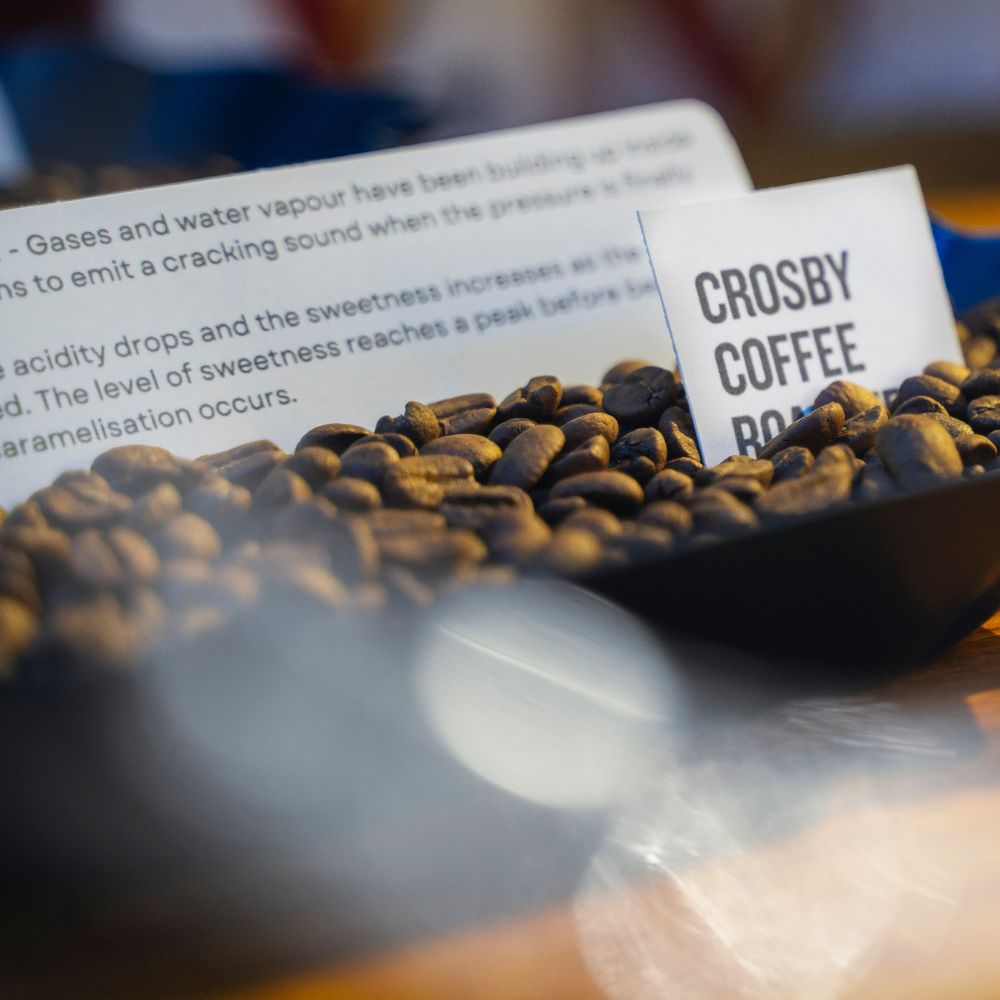
Coffee beans are not all the same size or weight. A bean from a light roast will weigh more than a bean from a dark roast, even if they look similar. And a large, dense bean from Ethiopia will weigh more than a smaller bean from a different origin.
These differences add up quickly when you are trying to brew consistently.
A single coffee bean typically weighs somewhere between 0.1g and 0.15g, but that range alone can mean a 50% difference in bean count for the same weight of coffee. This is exactly why the speciality coffee world measures by weight rather than count: several beans tell you almost nothing useful, but a number of grams tells you everything you need to brew consistently.
If you want consistent results every time, a coffee scale is one of the best investments you can make, as it takes the guesswork out of brewing entirely. You can find a range of brewing equipment in our shop if you are looking to upgrade your setup.
How Much Coffee Per Cup by Brew Method
The number of beans you need changes depending on your chosen brew method. Each method uses a different ratio of coffee to water, meaning the dose also changes.
Here’s a breakdown of the most popular methods.
Espresso
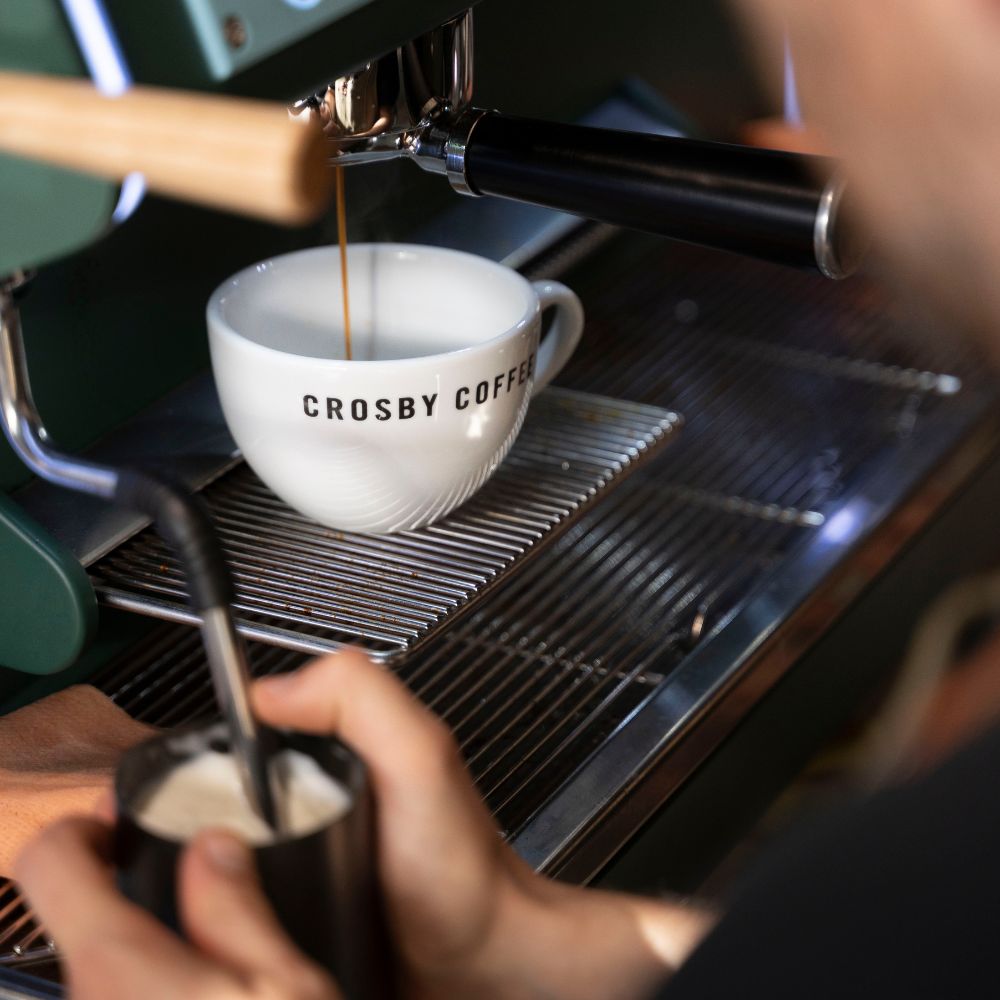
Espresso is the most concentrated brew method and uses the least amount of water.
A single espresso shot uses approximately 13g of ground coffee, which is roughly 55-70 beans. A double shot, which is what most coffee shops pull as standard, uses around 15-18g.
The standard ratio for espresso is 1:2, meaning one gram of coffee produces two grams of liquid. If you are brewing espresso at home, always grind your beans before you brew. Pre-ground coffee loses its flavour surprisingly quickly, and espresso is the brew method that shows it most.
If you are looking for beans that work well as espresso, take a look at our full coffee range.
Filter Coffee and Pour Over
Filter coffee is where the Speciality Coffee Association’s (SCA) golden ratio comes in. The SCA recommends 60g of coffee per litre of water, which works out to approximately 15-17g for a standard 250ml cup..
This ratio applies to pour-over methods like the V60 and Chemex, too. Filter brewing is a great way to experience the more delicate, nuanced flavours in a coffee, like fruit notes, floral aromas, and subtle sweetness. Light roasts and single-origin coffees really shine when brewed this way.
French Press
French press uses a slightly higher dose and a coarser grind. A good starting ratio is 1:15 (coffee to water), which means around 20-25g of coffee per 250ml cup.
One of the great things about the French press is that it is forgiving. Small variations in dose are much less noticeable than they would be in an espresso. If you are new to brewing at home, it’s a great method to start with.
Just make sure you are using a coarser grind. Too fine and you will end up with a muddy, bitter cup, and a lot of sediment at the bottom.
AeroPress
The AeroPress is one of the most versatile brewers around. You can use it to make a strong concentrate or a longer filter-style coffee, which makes it more flexible than most other methods.
A good starting point is 15g of coffee per 200ml- 250ml of water. Adjust the dose and ratio to suit your taste.
Moka Pot
A moka pot produces a rich, intense brew that sits somewhere between an espresso and filter coffee in character. The key is to fill the basket without tamping, as you want the coffee loosely packed and not compressed.
Depending on the size of your pot, you will typically use around 15g-20g of coffee. Use a medium-fine grind, finer than you would for filter but not as fine as espresso, and a medium to dark roast tends to work well.
Cold Brew
Cold brew is the exception to most of the rules above. Because it brews slowly over a long period of time, usually 12-24 hours in the fridge, you need a much higher ratio of coffee to water to get a good result.
A typical cold brew ratio is 1:8, which works out to around 30g of coffee per 250ml serving before dilution. That makes cold brew by far the most coffee-intensive method by weight.
Cold brew is usually made in batches and diluted to taste when served, so the effective dose per cup can vary quite a bit depending on how you like it.
Brew Method Summary
|
Brew Method |
Coffee per Cup |
Approx. Beans |
Brew Ratio |
|
Single espresso |
13g |
55-70 |
1:2 |
|
Double espresso |
15-18g |
110-140 |
1:2 |
|
Filter/Pour Over |
15g-17g |
100-120 |
1:16 |
|
French Press |
20-25g |
115-135 |
1:15 |
|
AeroPress |
15g-16g |
100-125 |
1:14-1:15 |
|
Moka Pot |
15g-20g |
100-140 |
1:7 |
|
Cold Brew (per serving) |
30g |
200-250 |
1:8 |
Does Roast Level Affect How Much Coffee You Need?
During roasting, coffee beans lose moisture. The longer and darker the roast, the more moisture is lost and the lighter the bean becomes. This means a dark roast bean weighs less than a light roast bean of the same green coffee origin.
In practice, this means a dark roast and a light roast of the same coffee will need a slightly different volume to hit the same weight, even though the gram dose for your chosen brew method stays the same. This is yet another reason to weigh your coffee rather than estimate by scoop or count: the weight is what matters, regardless of the roast.
By weight, the difference is fairly small, but it’s another reason why weighing your dose is always more reliable than estimating by count or volume.
Roast level also affects flavour in ways worth knowing. Light roasts tend to be brighter and more fruit-forward, with complex floral or citrus notes that shine in filter brewing. Dark roasts are bolder and more intense, with chocolate and caramel flavours that suit espresso and French press. If you want a balance of both, a medium roast is a great place to start.
Our coffee range covers a variety of roast profiles and origins, so whatever your preferred brew method, there is something to suit.
Tips for the Perfect Brew
Getting the dose right is a great start, but a few other things will make a real difference to what ends up in your cup.
-
Grind fresh: Coffee starts going stale the moment it is ground. Always grind your beans just before brewing for the best flavour.
-
Use a burr grinder: Blade grinders chop unevenly, which leads to uneven extraction. A burr grinder gives you a consistent particle size, which makes a noticeable difference to the cup.
-
Weigh your coffee: Scoops and tablespoons measure volume, not weight. A small coffee scale takes seconds to use and gives you consistent results every time.
-
Store your beans properly: Keep them in an airtight container, away from heat, light, and moisture. The freezer is not necessary for most people and a cool cupboard works fine.
-
Brew with fresh beans: Coffee is at its best around seven to twenty-one days after roasting. A Crosby Coffee subscription means freshly roasted beans land on your doorstep on a schedule that suits you. No more stale coffee from the supermarket shelf.
Find Your Perfect Beans
Getting the dose right is one of the most straightforward ways to improve your coffee at home, and once you start weighing your beans, you will wonder how you brewed without a scale. Browse our freshly roasted coffees to find the right beans for your brew method, or join us at one of our Liverpool coffee workshops if you want to perfect your own brewing technique.
Frequently Asked Questions
How much coffee do I need for a cup of espresso?
A single espresso uses approximately 13 g of coffee. A double shot, the standard in most coffee shops, uses around 14g. We'd always recommend weighing this rather than counting beans, since bean size and density vary too much to give a reliable count.
How many grams of coffee per cup?
For most brew methods, 15g-17g per 250ml cup is a good starting point, based on the SCA's golden ratio of 60g per litre. Espresso uses less (13g-14g per shot), and cold brew uses more (around 30g per serving before dilution).
How many coffee beans are in a 250g bag?
A 250g bag contains roughly 1,500-2,500 beans depending on the variety and roast level. At 14g per double espresso, you can get around 17-18 double shots per bag.
How many espressos can I get from a 250g bag?
At around 14g-18g per double shot, a 250g bag will typically give you 14-18 double espressos. This is a far more useful way to plan your coffee buying than counting beans, since bean count varies so much between origins, varieties, and roast levels.
Is it better to measure coffee by weight or by scoops?
By weight, every time. Scoops measure volume rather than mass, and the weight of a scoop changes depending on your grind size and bean density. A coffee scale gives you consistent, repeatable results.
Does grind size affect how many beans I need?
Grind size affects how quickly the coffee extracts and how the finished cup tastes, but not the dose itself. Keep the weight consistent and adjust grind size and brew time to dial in the flavour.
Leave a comment
Comments will be approved before showing up.