


How To Make a Cafetière Coffee
Learning how to make a cafetière coffee is one of the easiest ways to take your home brewing up a notch. As long as you get the ratios right, have the correct grind size, and brew for the right amount of time, you can make a smooth, full-bodied coffee every time.
The key starting point is a 1:15 coffee-to-water ratio (15g of coffee per 250ml of water), which creates a balanced and consistent cup. From there, you can adjust to suit your taste.
What Is the Best Ratio for Cafetière Coffee?
The ideal cafetière coffee ratio depends on how strong you like your coffee, but most people start with a balanced range.
The general rule of thumb is 60–65g of coffee per litre of water, which sits around a 1:15 to 1:16 ratio.
Cafetière coffee ratio guide
|
Ratio |
Strength |
|
1:11 to 1:13 |
Strong |
|
1:15 or 1:16 |
Balanced |
|
1:17 or higher |
Mild |
Why ratios matter:
-
Too much coffee = bitter and heavy
-
Too little coffee = weak and watery
-
Balanced ratio = smooth, full flavour
We recommend you start with a balanced ratio. From there, you can fine-tune to make the perfect balance for you.
How Much Coffee Do You Put in a Cafetière?
For most people, 15g of coffee per 250ml of water (a 1:15 ratio) creates a balanced and satisfying cup.
If you follow this guideline, it’s easy to scale up depending on how much you’re making:
-
250ml → 15g coffee
-
500ml → 30g coffee
-
750ml → 45g coffee
-
1 litre → 60g coffee
This simple approach helps you get consistent results every time, no matter the size of your cafetière.
How much coffee do you put in a cafetière for one person?
-
15g coffee + 250ml water = 1 mug
-
Stronger → 18g
-
Milder → 12–13g
How many tablespoons of coffee are needed per cafetière?
If you don’t have scales on hand, you can use 2 tablespoons of coffee per 250ml.
What Grind Size is Best for Cafetière Coffee?
The best grind size for a cafetière is coarse, with a texture similar to sea salt.
The larger particles prevent over-extraction and stop any grounds passing through the filters for a smooth and balanced flavour.
Get the grind wrong and even a perfect ratio won't save the cup.
How To Make Cafetière Coffee (Step-by-Step)
Follow these steps, and you'll get a smooth, well-balanced cup every time:
1. Measure your desired coffee ratio
Use a 1:15 ratio (15g per 250ml of water).
2. Place coffee into the cafetière
Use coarse, ground coffee.
3. Add hot water
Pour water just off the boil (92–96°C) over the grounds.
4. Stir gently until the grounds are fully saturated
Give it a quick stir to make sure nothing is left dry at the top.
5. Brew for 4 minutes
Let the coffee steep without disturbing it.
6. Plunge
Press down evenly to avoid disturbing the grounds.
7. Serve immediately
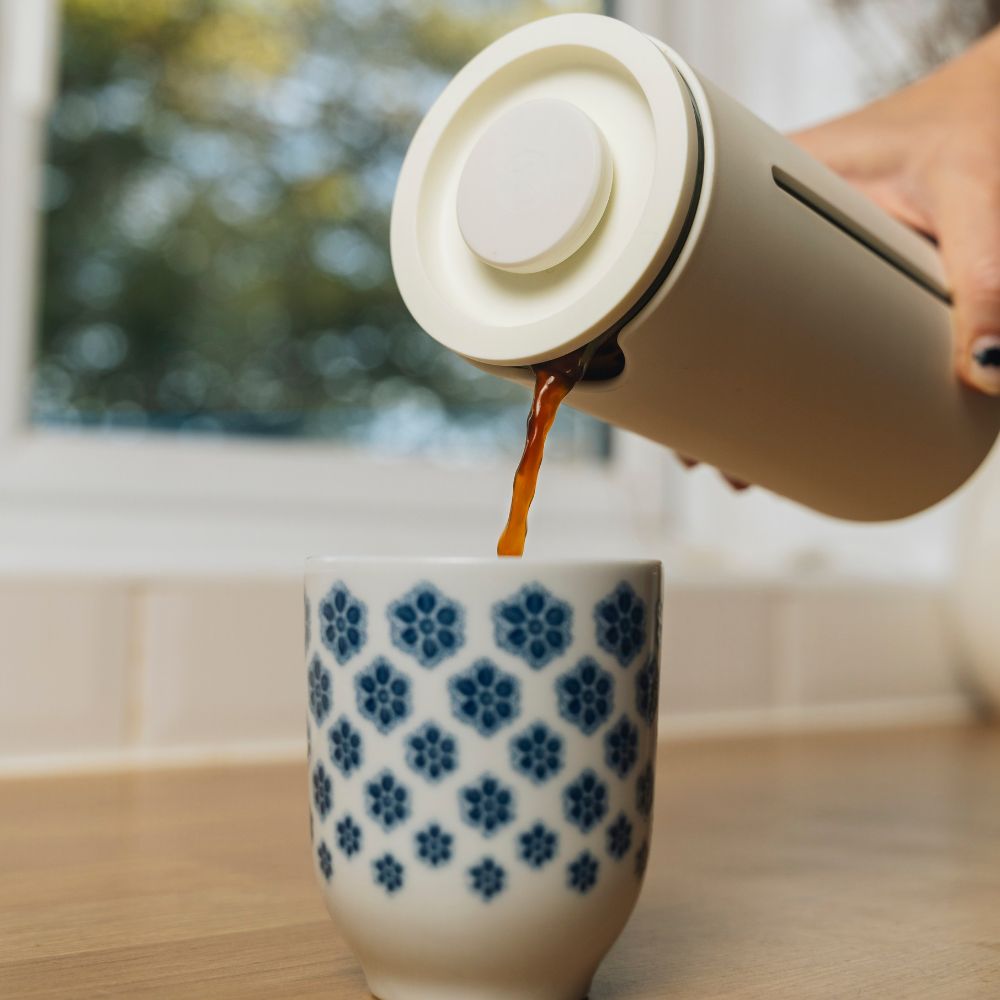
Pour straight away to prevent bitterness.
What are Common Cafetière Mistakes?
Many people struggle with cafetière coffee due to a few simple mistakes, including:
-
Using the wrong coffee-to-water ratio
-
Grinding coffee too finely
-
Brewing for too long (over 5 minutes)
-
Pressing the plunger too quickly
-
Leaving coffee sitting in the cafetière after brewing
These mistakes usually result in coffee that tastes bitter, weak, or muddy.
How to avoid them:
-
Stick to a consistent ratio (start with 1:15)
-
Use coarse (large particles that prevent over-extraction and keep the grounds from passing through filters) ground coffee
-
Keep your brew time to around 4 minutes
-
Pour immediately after plunging
Fixing just one or two of these can make a noticeable difference to your coffee.
Leave a comment
Comments will be approved before showing up.