


How Is Flavoured Coffee Made?
From hazelnut and caramel to fruity blueberry and seasonal pumpkin spice, flavoured coffee comes in a whole host of varieties.
But have you ever wondered how those flavours actually get into the coffee beans?
Many assume flavoured coffee is made by adding syrup or spices to brewed coffee. In reality, most flavoured coffees are crafted before brewing, when roasted beans are coated with specialised flavouring oils.
From selecting high-quality beans to roasting and flavour application, every step is carefully controlled to ensure a consistent aroma and taste in every cup.
What Is Flavoured Coffee?
Flavoured coffee isn’t simply coffee with syrup added after brewing. Instead, it refers to whole or ground coffee beans coated with flavouring compounds.
These flavourings are usually food-grade oils that attach to the porous surface of the bean. When brewed, heat and water release the aroma, giving each cup its distinctive taste.
Flavoured coffee comes in far more varieties than many realise. Subtle spices like cinnamon sit alongside indulgent dessert-style profiles such as crème brûlée, chocolate fudge, or salted caramel. Seasonal favourites like pumpkin spice are also popular.
What unites flavoured coffee beans is that the flavouring process happens after roasting, rather than altering the roasting process itself. This ensures that the coffee’s natural profile remains balanced while the added flavours integrate seamlessly.
But how do those flavouring oils actually get into the beans?
How Flavour Gets Into A Coffee Bean
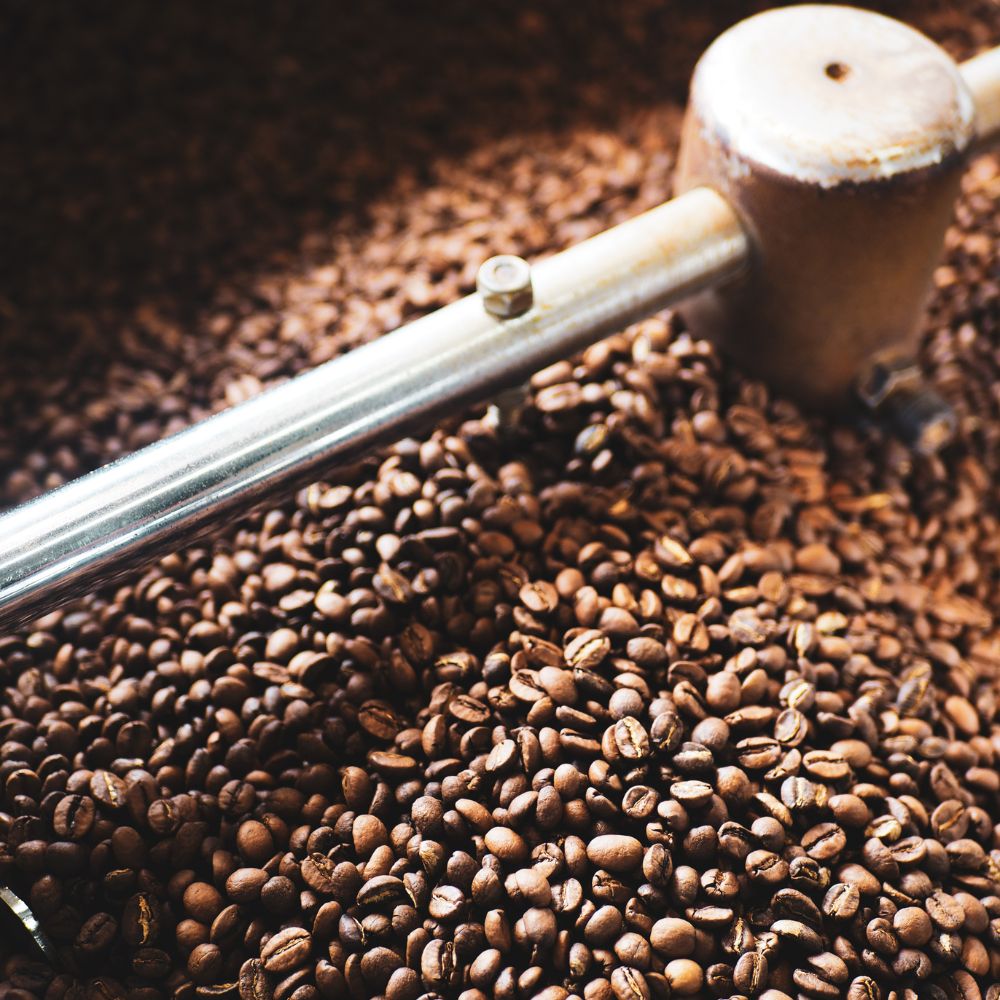
The most common method of flavouring coffee is by applying oils shortly after roasting.
When coffee beans leave the roaster, they are warm and slightly porous, making them ideal for absorbing flavour compounds.
The process typically involves:
-
Transfer to a rotating drum: Beans are moved into a mixing drum where they tumble as oils are applied.
-
Even distribution of flavouring oils: Sprayed or drizzled over the tumbling beans, the oils coat each bean uniformly.
-
Controlled ratio of flavouring to coffee: Too little, and the flavour is faint; too much, and the coffee can taste artificial.
-
Resting and stabilisation: After coating, beans are left to rest so the oils fully integrate, and even after packaging, flavours may continue to develop.
These steps ensure that the aroma and taste are consistent in every batch.
What’s The Difference Between Natural And Artificial Flavoured Coffee?
Flavouring oils can be derived from natural or artificial sources, or a combination of both.
Natural coffee flavourings come from plants or animals, such as vanilla beans or citrus peel. They give authentic aromas but can vary slightly between batches.
Artificial flavourings are synthesised compounds that replicate specific tastes. They are consistent, reliable, and widely used in the food industry.
Blending both natural and artificial oils allows producers to create flavours that are both authentic and consistent, ensuring every cup tastes the same.
What Is Propylene Glycol And Why Is It Used in Flavoured Coffee?
Flavouring oils rarely exist on their own. To work effectively, they usually require a carrier ingredient that helps distribute the flavour evenly and keeps it stable over time - one of the most commonly used carriers in flavoured coffee is propylene glycol (PG).
Propylene glycol helps dissolve flavour compounds and gives the oil the right texture and viscosity to coat coffee beans evenly. It also helps the flavour adhere to the bean surface and remain stable during storage.
Although the name may sound unfamiliar, propylene glycol is widely used throughout the food industry. It appears in many everyday products, including flavour extracts, baked goods, and salad dressings.
These compounds are considered safe for food use when used within regulated limits, which is why they are common in both food and beverage production.
Which Coffee Roasts Work Best With Different Flavours?
|
Flavour Profile |
Best Roast Level |
Why It Works |
|
Nutty (hazelnut, almond, pecan) |
Medium to dark roasts |
These roast levels often develop natural nutty undertones, allowing the added flavour to blend smoothly with the coffee. |
|
Caramel & Toffee |
Medium-dark roasts |
Enhances the natural sweetness of the beans and creates a smooth, dessert-like cup. |
|
Vanilla |
Light, medium, or dark roasts |
One of the most versatile flavours. Its soft, creamy aroma complements almost any roast level. |
|
Fruity (cherry, blueberry, citrus) |
Lighter roasts retain more acidity, helping fruit flavours stand out and taste brighter. |
|
|
Spiced (cinnamon, pumpkin spice) |
The balanced flavour of medium roasts allows spice notes to shine without overpowering the coffee. |
Can You Make Flavoured Coffee At Home?
Yes, although the results are usually more subtle than commercially flavoured beans.
One of the easiest ways to experiment with flavour is by adding spices directly to your coffee grounds before brewing. Ingredients like cinnamon, nutmeg, cardamom, or cocoa powder can create gentle aromatic notes.
Another option is to infuse whole beans by storing them in an airtight container alongside flavouring ingredients such as vanilla pods, orange peel, or cinnamon sticks. Over several days, the beans absorb some of the aroma.
Alternatively, coffee syrups or flavour extracts can be added to brewed coffee to achieve stronger flavours.
While these methods work well for home brewing, commercial flavoured coffees use concentrated flavouring oils designed specifically to bind to coffee beans, which creates a more consistent result.
What To Look For When Buying Flavoured Coffee
Not all flavoured coffees are created equal, and a few simple factors can make a big difference in quality, including:
Quality of the base coffee
The best flavoured coffees still start with good-quality beans. Lower-grade coffee is sometimes heavily flavoured to mask defects.
Balanced flavouring
A good flavoured coffee should enhance the natural taste of the beans rather than completely overpower it.
Freshness
Flavoured coffee can lose aroma over time, so freshly roasted beans generally produce the best results.
Oil levels
Flavoured beans often appear slightly glossy due to flavouring oils. However, extremely oily beans can sometimes indicate over-flavouring.
Discover Your Perfect Flavoured Coffee with Crosby Coffee
At Crosby Coffee, we combine quality sourcing and expert roasting to highlight the natural character of each coffee. The flavour notes you see on our bags reflect the coffee’s inherent profile, developed through origin, variety, and careful roasting - nothing is added.
From light, fruity coffees to smooth, chocolatey and nutty profiles, our range offers something for every coffee lover. Whether at home or in the office, you can enjoy a consistently high-quality cup that showcases the true taste of the beans.
Leave a comment
Comments will be approved before showing up.